Showing posts with label museum. Show all posts

Tuesday, 26 January 2016

Day 51 & 52: Christchurch

Monday 25th & Tuesday 26th January 

Christchurch was set up as an Anglican town on the marshes of the Canterbury plains. For a long while it was considered one of the most stable places in this earthquake prone country. Yet in 2011 a series of devastating earthquakes hit, along with aftershocks. After all these years Christchurch has gone from having to demolish all of its old, damaged, buildings and is working towards rebuilding.

Distance: Bus, 224km, walking, ~20km

Total Distance: 6019km

Getting out of Tekapo was somewhat easier than getting there, although some how I got the seat next to a guy who smelt of rotting chicken manure and decaying chicken corpses. Don't ask how I know what that smells like. Atleast I have a cold so I could only smell him through one nostril.

Arriving at Christchurch our driver dropped me just outside my hostel. It has been rated for many years as the best in the city, but made by the driver, speaking to the whole bus, made it sound far more sinister.
"My father once took me into Christchurch Jail. He was a warden there. Really creepy place. Spooky. Strange people. I wouldn't want to go in again."


I'm staying in Christchurch Correctional Facility! AKA Jailhouse Accommodation. The inside is lovely, white, clean and plain. Everything from staff tshirts, signs, bedspreads, and mugs are in the there of prisons- staff and signs are in jumpsuit orange, the rest being black and white striped. Three cells are maintained. The ground floor cell is filled with items from a standard cell, as well as a mannequin dressed as a warden. The cell above it contains artwork (graffiti) produced by the prisoners. Finally, at the far end of the building Solitary Confinement is kept, now embellished with cobwebs.

My room for the night


If you want age and spooky go to the prison in Napier, one of the first prisons in NZ and used for around 100 years. This one is much younger, and far less spooky. I enjoyed visiting Napier Prison, but not sure I would have stayed there. Christchurch, on the other hand, is one of the best hostels I've ever stayed in. It's well run, clean, friendly, the beds are great with a little shelf for a book and phone and 2 power sockets (some hostels are a nightmare for recharging equipment) . The toilets and showers have thankfully been upgraded since prison days (don't drop the soap!), as has the kitchen. 

Sorry, taken on phone when too dark...but look, prison mugs and table cloth!


Having performed an exorcism and the rites of Hades it was time to explore the city.
I quickly made for the train station. I'm leaving from here at 7:45am , so it's worth knowing where it is before a cold wet morning. From here I headed towards the museum, but wouldn't make it that day.
Firstly on my travels I hit the park and stumbled into the cricket oval, a site where they were clearing up from the weekend and where last year some of the Cricket World Cup was played. 
From here I went further and decided to take a short cut through the Botanic Gardens.

Hands down best Botanic Garden in New Zealand. 
I've been to a lot of them, nearly everywhere seems to have one. Dunedin's was lovely, but Christchurch was far better. The glass house is nearly the size to the one in Edinburgh, with smaller areas for rainforest, desert, marshland, and temperate displays. Outside is the large rose garden with each variety having its own bed, and surrounding borders including the large Dahlia border which was in full bloom.
Much of the garden is lawn and various trees, but also there are rockeries and native plant displays, a water garden, a long mixed border with plants from all over the world, a maple garden surrounded by Hydrangeas, and decorative plots by the road surrounding a painted fountain.
The visitor centre shows off how this is still a working botanical garden. Behind the cafe and shop stands a glass warehouse with rows upon rows of plants each in a pot ready for transport or to be transplanted. The area must be getting on for 200m by 50m, and that's just the nearly fully grown big stuff that they show off. 

View from the balcony in glass house


By this point it was 5pm so I had a quick wander to get a rough idea of where to start tomorrow, then went back to find milk for tea and Dominoes next to the jail for dinner. $5 for a pizza! I can't make a hot meal for that little (well, I can, but I like to pay myself minimum wage).

Next morning my first job was to find a library with computers so I could transfer my Canyon Swing photos from the USB stick to the Internet, then post the USB stick home. I grew up in Britain, I don't trust the post not to lose the parcel.
The useful thing about this excursion into non-tourist areas was that I could walk through the back streets of Christchurch, seeing normal life and what remains after the quakes.

In some areas they're having a complete revamp. Having torn out everything they're well on their way to getting shopping malls, multi-storey car parks, and offices built up to quake proof code. Many stretches of the street and pavements are fenced of as busy crews of skilled workmen, both local and European, work away or have tea breaks. 
On the other hand there are stretches where there's nothing but one wall and a stack of shipping containers. The area isn't very old, hence historical buildings might have stood for less than a century. Many of these buildings, if they didn't collapse, were condemned as unsafe. Yet the front face is a piece of local heritage. A dangerous piece.
Thus the buildings were demolished, but the front kept. Shipping containers (invented to enable the US military to transport supplies and vehicles during WWII, now used in their millions, celebrated for their simplicity and strength being entirely made of steel....I'll stop now)... Shipping containers are immensely strong, resilient, and relatively cheap so have been used extensively in the city. One use has been stacking them in front of old buildings. Stacks are about 6 high, with a stack of 3 on the roadside, held together with cables and attached to the building. Being so thick and strong this both protects the public in the event of a collapse, whilst maintaining the building.


Another use for shipping containers is the Re:Start Mall. 
Before I left the UK there was (another) flood that destroyed a towns shops in Yorkshire. The town set up a shopping centre made out of shipping containers. A rectangular enclosure was made of them, each containing a shop, with a gap for an entrance, an arch made by spanning 2 containers across the entrance. It was basic but worked well and everyone was happy enough. 
That's what I expected here. Something basic. Not what I found.
These are nolonger just shipping containers. They have glass fronts, proper doors, several containers joined together in a manner so you can't see the join. The interior looks like any other shop. There's even a container on the top of each with a sign for the shop it sits on. And everything's been painted in bright technicolour. Just looks like a create idea for a shopping mall, not an emergency measure to keep shops open. George Clarke would be proud.
(Check out George Clarke's Amazing Spaces, he sees as well as building some phenomenal things. He did a whole program on shipping containers, as well as people converting planes, boats, swimming pools, tree houses, trains, old buildings from the war.)
Most of your average shops are there, including the post shop, so there's now another wee parcel sent off to my parents.

Also, there were statues


Afterwards I visited the Cathedral. This was one of the oldest buildings in Christchurch, the city having been set up by staunch Anglicans, yet it was also one of the worst hit by the quakes, as were many of the city's churches. Stone edifices of 14th century design are not built to withstand an earthquake. 
This isn't the first time the cathedral has been damaged by a quake. 100 years ago the tip of the spire was broken off. Back then it was an annoying novelty. This time the damage is virtually irreparable.
Talking to wardens the parish wants a simple rebuild- even that totals over 60 million NZD though (£30m). Better that then the proposed rebuild by 'others' though (I didn't ask who the 'others' were. Not local parishioners by the way she said it.) would cost well over 200 million NZD (£100m) 
Either way the present site looks lamentable, waiting for a plan, whilst getting overgrown with weeds.


There is a shiny new cathedral though, and it's the largest building in the Southern Hemisphere made primarily out of cardboard! Had to go see it.
Imagine this. 12 shipping containers lined up in 2 rows, parallel, 12 yards apart. 6 tubes about half a yard in diameter and 4 yards in length, made out of a type of card board, are then placed into an arch, 3 forming each side. Repeat 98 times. Then put interlocking tough clear plastic over the outside. Add a wall at one end, doors at the other, and above the doors glass painted with images from the Windows of the old cathedral. And that's roughly what they built, helped by German engineering. 
It's an impressive structure with lots of additional features they are very proud of. The containers are all used for offices. The doors at the back can be completely opened out, useful when the place is packed out. There's a side chapel with a cardboard tube screen that opens out for use, or is closed to conceal during larger services. The enormous English oak lectern, altar pieces and Cathedra (that's the Bishop's big chair) were all rescued from the cathedral by a quake rescue team (after they'd saved as many people as they ever could).
It's all very impressive. I'm always impressed by the older churches here, in Europe we spent generations getting them up. Here, on the South Island, they did their best to build replicas in a few years, and many have lasted. Buildings of such complexity, weight, and size are increasingly difficult to build for us today- even here, such as in Dunedin, a hundred years ago people ended up taking short cuts due to time and money.
The temporary cathedral was one of the first buildings erected after the initial quake- they were finishing as the second quake and aftershocks hit. Yet they had congregations packing the place after each event, giving the local people the support and community they needed.


Time to finally hit the museum- mostly just a quick run through though.
First to the cafe though as it was 2pm and I hadn't eaten since I'd found a place that did chips and gravy that morning. Nothing to remind me of trips to York livestock market with my parents as a child like chips and gravy.
At the museum I found the cafe.
"Good afternoon, Sir, how are you today?", asked a very cheerful waitress. I had to stifle a laugh as I thought of Homer Simpson: "For once someone will call me 'Sir', without adding 'you're making a scene'"
I got some tea and was given a decent sized slice of date and honey cake, warmed up, smothered in butter. Yum. I do deserve the calories, honest. A read, a wee nap, and back on it.

The museum is huge. They even have an Allosaurus, plus an Edmontosaurus skull, Triceratops skull, and sauropod forelimb! 
Christchurch being the starting point for many Antarctic expeditions there's a big display showing their history, including much of the equipment they took, from clothes to exploring vehicles, such as the first tractor onto Antactica. A fine collection of stuffed animals too, both Antarctic and from New Zealand. 
There's the usual displays about Moari and Pakeha settlement, history, and culture, though larger than many.
There was an art exhibit of Jeff Thomson, showcasing his work and his talent. He works with corrugated steel, building everything from life sized giraffes, pigs, hens, dogs, and even a car, to bouquets and miniature houses.
Finally, my favourite, but not a fixture, Leonardo Di Vinci! A special exhibition showing his notes including, importantly, working models of his drawings! Well, working as in many could move. The flying machines still weren't going to fly, not the "robot" walk, but the ideas were all there. Flying machines, pulley systems, gearing ratios, pumps, levers, war machines, bridges, robots, musical instruments, ball bearings, ways to measure time. There were also a few of his paintings and a video about his life. 
Oh, and body bits. Well, very detailed models of bodies. Di Vinci, as an artist, and then as an engineer-scientist did a lot of research into anatomy. It was important as part of Renaissance art for students to understand the human form so as to draw and paint bodies appropriately. He went further however, looking beyond the superficial right down to the cranial nerves and the action of the heart. He did much that was against the doctrine of the church, which would eventually helped us all.

I left through the mock up of a Christchurch street from a hundred years ago...which was basically York as it is today, but with less neon.


Thursday, 7 January 2016

Day 34, 35, & 36: Hogwartz, Dunedin

Friday 8th, Saturday 9th, & Sunday 10th January

Bus to Dunedin, World's Steepest Street, Hogwartz!
Dunedin University City, Natural History Museum, Churches of Dunedin
Botanical Gardens, Aviary, Railway Station, Settlers' Museum, Speight's Brewery!

Distance: Bus Queenstown to Dunedin, 301km, Walking round Dunedin, ~15km

Total Distance: 4783km 

Dunedin's great! Why aren't more people going there!?!

Compared to the Kiwi Experience buses the "Bottom Bus" was a small older bus that reminded me of something from Forrest Gump. We travelled through a few small towns that had once thrived with the industry of Gold Mining now reduced to farming back waters or minor tourist destinations. One of these was Palmerston South- the southern counterpart to the town I leaved near on the north island, Palmerston North. They're not really connected in any way, but accidentally got the same name so became designated by their island. PS is no where near as big as PN. There's a monument on a hill over looking it to a local MP who was part of the negotiations as to where the capital city should be.

They also have a monument to the FIRST FROZEN MEAT EXPORT!
This was actually really important moment for NZ- frozen meat allowed more than just the tanned skins and fleeces could be exported. NZ had lots of animals it could profit from, but it was difficult to send them overseas. Suddenly carcasses could be sent to the rest of the world and the economy jumped and, unlike the early days with forestry, whaling, and gold, the farming economy was more stable and continued to provide revenue.

We came over the hill to Dunedin and, having expected a regular town, I was met with a city, speckled with medieval style churches, student flats, and university buildings.

We dropped in on the way in to Baldwin Street, the world's steepest street. At 19' it is very steep people were very bravely driving up the street or reversing out of their driveways. The houses either side have 1 storey at one side and 2 on the other. The council has used cement on most of the road to give traction when people drive up it. Must be a lot of people who come here- there's a refreshments stall half way up and a souvenir shop at the bottom. It's a street on a steep hill. I can live without the tshirt, thanks.

Time to go to Hogwartz!

Hogwartz was to be my hostel for the next 3 nights. It wasn't actually that Harry Potter themed- there was a little, but not a great deal. If that was all I'd gone for I would have been very disappointed. Yet I was also after somewhere nice to stay, with nice people, and nice surroundings- I really don't ask for much these days- and I really was very pleased with what I found.
The hostel was once a priory for the Catholic monks who went to the St Joseph's Church next door, which also has the nunnery on the opposite side. The design is the same as many of the buildings in Edinburgh, giving it, for me, a touch of home. There were many lovely people staying there and one of them, in my dorm, was a young man from the Australian army holidaying in NZ.

The Ozzie and I wanted to go see nearly all of the same things in Dunedin so for the next two days we went to things together, occasionally accompanied by an older Chinese guy.

DUNEDIN

The city was founded by Presbyterian communities from Scotland escaping religious persecution. They wanted to build a home from home and this Dunedin is based on Edinburgh. Dunedin is actually the Gaelic name for Edinburgh. It even has a Prince's Street and George Street, though they are not parallel, running along the same line, meeting in the Octagon, the central "square" of the city.

We end down to the Train Station, the most photographed building in New Zealand, one of the few still standing made of stone. Here there was a farmers' market so we bought fruit, bread, and salami at a surprisingly cheap rate- less than the supermarket!

From here we went on to the Natural History Museum. Being based on the University city of Edinburgh the founders of Dunedin invested heavily in the university here and the museum society, something I wasn't quite thinking of as we climbed the stairs.
"I've been to so many museums in New Zealand now I'm starting to feel kind of jaded. They all have the same sort of thing, I worry I'll get bored", I had to open my big mouth, of course. 
At this the museum employee just behind us piped up,
"Well we do have the Planetarium now, and there's the butterfly forest. If you go to the top of the  building we have the animal attic, New Zealand's biggest collection of stuffed animals." JACKPOT!
(I appreciate the killing and stuffing of many animals is not the done thing now, but they're over 100 years old and remain interesting.)

The museum did not disappoint. We not through the best displays of ancient Natural History of the country I've ever seen- even even better than Te Papa in Wellington, and I love Te Papa. Further up we found the animal rooms. The Empire apparently sent half of Noah's Ark here, although there was the occasional pair. Ozzie had done biology at university, and was thinking about doing marine biology here when he finished in the army, so we both had a significant interest in what we found.

There were also fossils of dinosaurs and Moa bones, a section about cultures of the world, including an Egyptian Mummy and a caste array of swords. Finally we made it to the special exhibit about Einstein before we left.

The university was just across the road, so we ducked in there. The students aren't in town right now, hence the quietness of the place, making our walk through both quick and boring. Excellent place, looked like somewhere I'd have enjoyed studying, yet without the people it was dead. 

Ozzie went for a run whilst I had a quick poke around the local churches.
These intrigue me as they are in the style of British churches- which are about twice the age of this nation. The time and skill to build these places is not easy to come by. The Sctos were determined though and they nearly got what they wanted. Nearly.
The church by the Octagon has a very plain back to it, incorporating the altar. This is entirely at odds to its front and midsection, which is decorated with all the usual details of a British church. Turns out they ran out of money after the First World War, and building ceased. It wasn't completed until 1971! I met a man who's father-in-law had been the architect. They had never had the money to match the architecture of the rest of the church, so he'd decided upon a simple, plain design, yet one that matched with the overall outline of the building. For all that it's unusual, the design does work, preventing the building from being an ugly mess it might otherwise have been.
The other church I went to was St Josef's. The Catholic Church had managed to build a similarly impressive structure, and had even completed it. However it was not as large as the original plans. The ground plans, like many churches in Britain, show the shape of a cross. Only the foot of the cross was built, the arms being missed out. It's still large and lovely though.

That evening the Chinese guy brought out his special green tea brought from China. We discussed methods and theories around tea making, as well as different forms of tea. His green tea was lovely, and we drank away the evening discussing New Zealand and our travels here.

On my second day we went, Pommy, Ozzie, and Chinese, to the Botanic Gardens. We took a frizz bee with us and had an hour in the sun and wind trying not to entirely destroy the garden. It got lost in a tree once, into the rose garden a couple of times, and then as I fished it out of a bush a bee stung my foot. Man down, man down! We ended the game there and went into the tropical glass house.
The tropical house was amazing- the Chinese guy and I took lots of pictures of the beautiful flowers and he told us stories of what could be used for different types of tea.
We trundled around the rest of the gardens, seeing the duck, the tree, and up to the Aviary. I've seen a few Botanical Gardens with Aviaries here, but none as large as Dunedin's. As well as an array of rare species they had many different parrots that were all entertaining.

Ozzie went off of the museum again, Chinese went to go have a sit down and make tea, and I went off to go see the Settlers' Museum. It was diverse and had a lot more about the actual people who were the first European people here than many other museums I've seen. There was even a mock wattle-and-daube cottage showing how the first settler's lived, and a reconstruction of the sort of cabin they would have had on the voyage here.

I stopped in at the Railway station afterwards. Only scenic tourist trains go through now, no public trains. Within there is now a large cafe, a museum, and an excellent and cheap art gallery- paintings by the local art society for 1/10th of the price you'd pay elsewhere. I nearly bought a $50 rabbit-the artist had done great work on the eyes, I've done many eyes, they're hard- the results are either terrible or amazing, and these were amazing.

There was one space left on the 7pm Speight's Brewery Tour, so Ozzie and I took them up. We were guided around NZ's oldest working brewery, got an education (Mr Speight was from Wakefield, near my home. He might have even been to my high school.), before making it down to the bar. Free beers! Many many free beers! And as the last tour we got in some extra, after hours, time! The glasses were tiny, but we kept at it and came away with a slight stumble. 

I didn't make it to the Castle, which disappoints me, but it's not a real castle, I think I'll be able to leave it for next time. Sounds good though.

Tuesday, 16 June 2015

Palmerston North - my local town


Giant Wetas on the side of the Art Gallery!


Like virtually anyone who ever lives anywhere I've utterly failed to visit my local area as a tourist. I know where the local supermarket is, the bowling alley, the paintball arena. In my first few weeks I did make something of an effort to visit the local Manawatu Gorge, the mountain ranges, and see the Tasman sea. This weekend, however, I finally made it to the cultural quarter of Palmerston North!

Palmerston North AKA "Palmy" sits between the flat, windy, cow-infested plains of the south-west, and the long chain of mountains forming the backbone of New Zealand's north island. Out beyond these plains is the luke warm Tasman sea, with long flat beaches and enough drift wood for semi-regular evenings of fire and swimming with mates. Within the forest-bound mountains are a labyrinth of tracks old and new, with huts one can cheaply stay in to make for a long weekend amongst the trees. Dividing this mountain chain in two is the great Manawatu river, eroding the rock as fast as the earth can force it up- resulting in this being the only river to flow through a mountain range in the world! Along this Manawatu Gorge are the rail line and a road, which occasionally succumb to rock slides from the surrounding, growing, mountains. At the edges of the gorge, often high above it, run the gorge walk, 10km of forests and look outs, as well as the vast wind turbine farm, turning the regions meteorological flatulence into green energy.

Between this great river, the Rangitikei river, and the Whanganui river lay the flat plains, where the original colonists decided to fell trees, and thus created a space for agriculture to thrive. This took far longer and far more time than one would think. The land was wet, in parts boggy, and the soil quality could be poor. There were originally no worm in New Zealand- yet with their introduction they quickly spread, turning over and composting the forest waste, allowing a more rich, consistent, soil to be created. Colonists where lured by land companies to the far side of the world, looking for cheap farms and space. Rivers flooded, farms were washed away, people came and went. Eventually, however, the rivers were tamed, forests removed, and the farms sprang up.

In the east Palmy grew with this development of the colony. There were roads, factories, and an air field built. But what really puts Palmy on the map from this age is one Mr Charles John Munro. CJ Munro was from Nelson and, after attending school in England, brought rugby to the Kiwis in Nelson and Wellington. "The Sport that shaped a Nation" as the museum puts it. The New Zealand Rugby Museum is in Palmerston North because that is where CJ Munro eventually lived and died. He now stands outside the museum, ironclad and carrying a ball in the most gentlemanly fashion.


The museum remembers many things, and is mostly filled with old shirts, caps, and magazines. However, this is a very basic over view of New Zealand Rugby History.

Like most Polynesians, Maori are big guys. Built like a brick s**thouse, in old english. They are also capable of being very hard workers- a number joined the Royal Navy during initial contact and the officers had only good reports. Sometime later Maori volunteered to create a battalion for the first world war. The Europeans didn't ask for this- they discouraged it viewing the war as caused by Europeans, and thus to be fought and resolved by Europeans. Despite this the Maori eventually made it to Gallipoli and proceeded to scare the crap out of the poor little Turks.

Anyway... with both the native and colonial populations being filled with strong, hard working, men, prepared to duke it out at the end of the day, New Zealand found itself a crucible of egg-tossing genius. And right from the beginning the Kiwis took the world by storm. I won't go through every game & tour, but there was Australia, South Africa and England- and they won nearly every game. They introduced a new, faster, form of the game to the old, slow, European circuit. At one time they were using a different formation of scrum to other nations, which was more effective- to the point that it was declared cheating, and made illegal.

Significant efforts were made during the wars as well, with large games being organised during the First World War between the various British Armed Forces and our allies. It was after the wars, however, that relations with a previous ally was strained, and is viewed by many New Zealand historians as one of the founding movements of the independent nation. During the years of apartheid in South Africa New Zealand was asked to select its teams on a racial base. This effected both tours by the Springboks to NZ, and by the All Blacks to SA. This resulted in two major events for New Zealand. Firstly, after dominating the sport for so long, they suddenly started to struggle, bringing home defeats. Secondly, and more importantly, in 1969 HART was set up- Halt all racist tours. "No Maori, No Tour". The Springbok tour of NZ in 1981 was the time of greatest protest. After decades of petitions and protests the people spoke with force and in numbers. Threats were made, games cancelled, and the All Blacks, as well as provincial teams struggled to perform. Only in 2/3 of the National games, and against the NZ Maori team, were the South African's held to account. Whilst some Kiwis wanted to keep politics out of sport, and simply have a nice game of rugby, the protesters carried on.

South Africa had been part of the British Empire. Originally it was seen as a necessary part of the brotherhood of colonies to be on good terms, politically and socially. It was therefore New Zealand's duty, as part of the Commonwealth to play Rugby against South Africa. It is therefore deemed the for most event of New Zealand's independence that as a people they declared that they would no longer play their national sport against South Africa. When, four years later, the New Zealand Rugby Union proposed a tour of South Africa, they were sued by two layers who declared that such a tour would break the society's constitution, and the tour was prevented by a High Court Injunction.

These events are viewed as helping establish the modern, independent, moral, state of New Zealand.

It is also argued that this break in tradition gave NZ the confidence to turn further from its traditional old allies, resulting in the work done between 1984-1987 which resulted in NZ becoming a Nuclear Free Zone. This broke certain treaties that NZ had with the USA and prevented any Nuclear-powered vessel or nuclear waste from being brought near the islands.

With Maori back permanently in the All Blacks they continued to beat the snot out of much of the world, winning the 1987 World Cup, and many after that.

"Except when the English turn up." "Yeh, whatever." "Well, we'll see what happens at the World Cup this year."


So, that's a short history of New Zealand's Rugby History.
A sport where big men & women throw around an egg.

You know what else was big and involved eggs?

DINOSAURS
(a seamless link!)

Until relatively recently it was thought NZ didn't have any dinosaurs. The majority of the present landmass is less than 65 million years old, and prior to that had spent many millions of years drifting out in the deep blue. Recent work by amateur paleontologists, however, has shown that NZ was awash with these proto-birds, long before the island was conquered by modern birds.

This has lead to me being fortunate enough to bump into the touring dinosaur exhibits, just as Jurassic World is about to come out.

As well as the dinosaurs, though much later, NZ was ruled by the birds. The Museum has a skeleton of the ancient Moa- the largest non-dino bird to ever exist, some species reaching 3.6m(12feet) in height. A bird which had completely lost its wings (not even a scrap of bone to suggest it ever had more than 2 limbs) and lived on a diet of NZ flora, right up until the time humans came to live upon a diet of NZ fauna.

Model of a Moa in the museum reception area- the little one is about 4ft, the big one was about 10ft

Prior to human immigration the only predator of the moa was the Haast's Eagle, the world's largest ever eagle, with a wing span of up to 3m. Both disappeared as hungry humans hunted their way through the giant Moa and foraged for the vulnerable moa eggs. Within an estimated 160 years of man's arrival the Moa was extinct (other than a few reports of the smaller species reported in the most remote locations up until the late 19th century). The Haast's Eagle died out soon after the Moa.

Moa Skeleton, with a size comparison for this species


After that white people arrived and proceeded to further demolish the native abundance of avian-dominated wildlife, aided by their cats, dogs, guns, axes, saws, chainsaws, explosives, deer, cows, sheep, horses, goats, possums, stoats, weasels, worms...etc. (Mixed sources saw the Maori brought the rats, mice & some of the pigs) Thankfully this was minimised by the formation of a number of large national parks around unfarmable mountain land and sacred Maori sites, now mostly managed by the Department of Conservation. The rest of the country was bought from local Maori by large companies (at a "fair" price- so starts 150+ years of arguments), divided up, then sold to a mixture of willing and desperate immigrants.

Part of a governmental agreement with these land companies was for only families to be  sold these land plots. The concept was that a family would stay and work the land, whereas single men could be simply buying up land to sell later at a better price. When the inspectors did finally make it to my local region of the Manawatu they found much of the land had been sold to single men. The companies informed the inspectors that there were no families to take the land, and the men informed the inspectors that "we are perfectly willing to get married, if but the ladies were available". At some stage immigration laws changed to a proto-type "points system", such that women were favoured to men- men only allowed in if married, or if they had unmarried sisters who would be coming with them.

And thus we have the Dairy Plains of the South-West of Today (also see my Taranaki entry)


Finally, some extra pictures
I think this is "Manaia, a spiritual guardian and carrier of supernatural powers. Traditional depictions include the head of a bird, body of a man, and tail of a fish. Provider and protector over the sky, earth, and sea. Likened to a bird sitting on your shoulder, looking after one's spirit, and guiding the spirit where it is supposed to go when the time comes."


Found by a farmer in a local wetland, this carving once lived in a Maori Whare ("Fare"- large house/hall)


We've got one of these at home! A Fordson Major


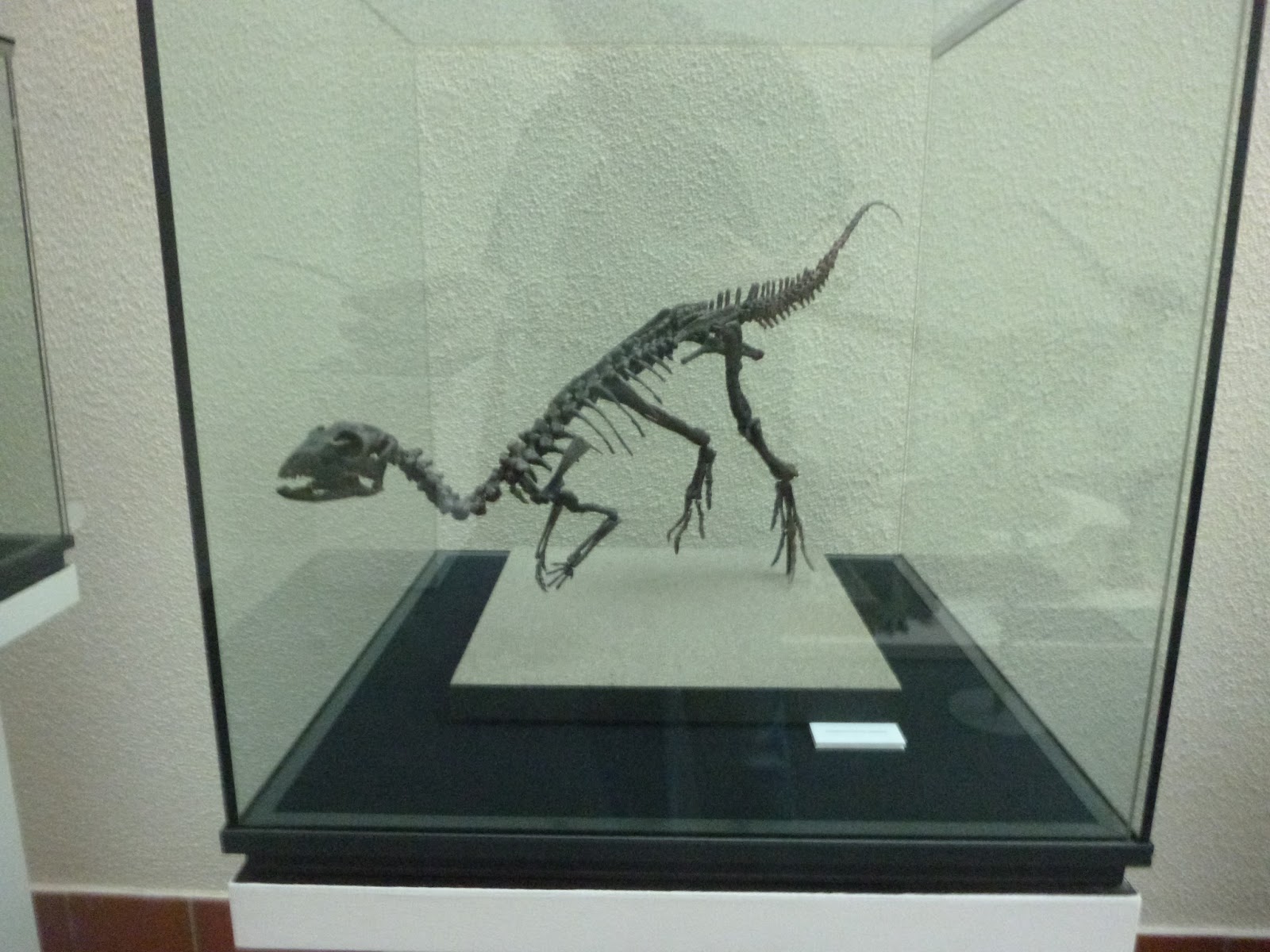
Lots of mini-Dino skeleton sculptures that were randomly on display


A Sea-lizard skull


My new pet!


Sunday, 26 April 2015

Taranaki Part 3: New Plymouth

A continuation of my trip to Taranaki, this entry is primarily about New Plymouth. This is the primary city in the region of Taranaki, out on the Western coast of New Zealand's North Island. I wasn't really expecting much (not much of a city person) but really enjoyed my short stay here. The beach front is beautiful, and the tourist center combines the city's large museum & library. Hoefully I'll be able to go back at some time. I don't have a great many pictures of the city, but I've bought a few books about the region which I'll be sending to my mother soon, and I'm sure she'll be happily showing anyone who visits.

I didn't have time to visit the local parks, only spent a small time at the beach, and spent the time on the city looking at the museum. I'll give you some details of what I learnt there later, but for now I thought you'd like to see the HUGE rock that sits on the water front. This stands high above the city, allowing views far out over the region, out across the Tasman sea, and across to the mountain. The climb to the top of this bastion isn't easy and involves a decent section of rock climbing near the summit (wouldn't be allowed in the UK, Health & Safety gone made!)

This is the rock, from the bottom


And this is the route I undertook, with a few steps and chains to help get up


There were some phenomenal views on the way up, including the port, the city, and the mountain


At the top was a beautiful view of the coast


Finally, I'll leave you with a weird thing that was at the top, a Trig Point that has been rigorously adorned with birds


Nearly forgot the one thing I did take pictures of in New Plymouth- glowing chairs! They were in the museum's cinema, made of translucent plastic, with constantly changing internal lights. I want one!