Showing posts with label Maori. Show all posts

Friday, 18 December 2015

Day 9 & 10: I'm on a boat! Sailing, Kayaking, and then back to Auckland

14th & 15th December
Day 9: Sailing around the Bay of Islands, had lunch on a beach and went Kayaking around some of the coastline, which was BEAUTIFUL. 
Day 10: Waitangi Treaty grounds, the birthplace of the nation, before leaving for Wellington
Distance: Boat 30km?, Walked to-from Waitangi 3km & Bus 227km 
Total Distance: 1978km


Day 9
She's A Lady is a 50 ton cruising vessel that takes people out into the Bay of Islands for a day of sailing, kayaking, snorkelling, swimming, hiking, lunching, and chatting with the World's Coolest Skipper, Cpt Dave from Miami, now of New Zealand. He's so chilled out yet so knowledgeable about boats and the Pacific Ocean, and with the accent from Wayne's World most of us just spent the afternoon listening to him talk about his amazing life sailing other people's super expensive boats, hunting local pigs, and making moonshine. 

Anyway, less about the amazing Dave, more about the amazing me.

The wind wasn't great in the morning and we had an island to get to, so at first we started out motoring along with the engine. But the main sail was put up.
"Why do we put the sail up?"
"Erm...cos it's easier if we do find wind?"
"Yes, but the number one reason is because it looks cool, and that's the most important thing!"

I took to the wheel half way to our island, looking after the boat as Dave went to do other things. The sun was shining, the water was clear, the islands, as ever, spectacularly beautiful. We went slightly off course to have a quick look in at some small blue penguins, the world's smallest penguin which lives around New Zealand. There were also a few cormorants happily fishing in the waters, or relaxing in the sun.

We eventually set the anchor down in a small bay with no one else around. The kayaks were thrown overboard and Lydia (another Kiwi Experience traveller who's from the southern UK) and I took them over to the coast. Here we paddled around the outcrops, spotting more birds, a few fish, splashing about in the 1metre of swell (trying to keep of the rocks!) and bravely/stupidly/luckily working our way into then out  of some delightful caves and inlets.

After some time we took the kayaks to the beach for other passengers to explore the waters. We headed off around part of a cove by foot, before returning for a sit down before lunch. Dave brought a basket out of the boat. Others arrived from their snorkelling or walking across the island to another beach. Freshly made hefty healthy sandwiches of ham, egg, lettuce, tomato, carrot, mayonnaise and cucumber in multigrain bread appeared, with kiwi fruit and afghan biscuits to follow, accompanied by lemon squash. The sailing boat bobbed in the clear blue water as we sat amongst have the trees above our private golden beach, the sun filling the sky as a refreshing light breeze played at our backs. No one said a word.

We returned to the boat via a smaller motor boat. We unfurled the main sail and jib sail, catching the growing breeze. At a steady 5 knots we quietly, leisurely, peacefully, made our way back. Dave answered questions about the area, sailing and other boats. He explained about the leisure craft in the Bay as well as the rest of the Pacific, most of which he has seen, it would seem.

We left the boat feeling very relaxed. 


Day 10
The bus was due to leave at 2:30pm, giving us a morning to use as we saw fit. Many others went to the beach, but I knew I simply couldn't miss out the chance to go to the Waitangi Treaty Grounds.

The Waitangi Treaty made the Maori citizens of the British Empire and New Zealand a(nother) colony. It "protected" the Maori from the French and Catholic missionaries who were marauding their way across the Pacific and gave the crown some control over the lands, such as bringing law to the lawless whalers settlements.

There's a huge amount of debate about the treaty. I'm sure I've covered it before nearly a year ago. Let's not do it again.

As a resident of New Zealand (I have a NZ Driving License!) I got $10 off entry and a free tour or "cultural experience". I can live without a tour, but the CE sounded good, and it was!

The the top of hill where the treaty was finalised and the first signatures signed sit two houses. One is the old European house, now a museum. The other is a large, decoratively carved Maori Whare ("Fare", Wh=F, Translation: House/Hut/Hall). Here we sent Cheif Gregg of Cristchurch forward as the visitors representative, to face off against the warriors' welcome. Once it was understood we came in peace we removed our shoes and went inside. The Maori Cheif made a speak in both Maori and English, followed by a grateful thank you speech from our Chief Gregg. We were taken through a history of Maori music, singing, dance, and warrior training. It was great and I'm very glad I went but it's difficult to describe it all. You'll just have to come here and see it yourself. 
Or search YouTube. 

I had a quick walk through the small forest of native plants planned and planted by a Victorian, english botonist. At the bottom of the hill by the sea stands a long house. Here are housed the 3 ceremonial war canoes built and subsequently used for each Waitangi Day celebration. When Queen Liz visited in 1990 she asked to make the main, longest boat a "HMS" vessel. The Captain agreed, so the Royal Navy has a Maori War Canoe in its ranks! W might not have the world's biggest navy anymore, but we definitely have the coolest.

I'm now back in Auckland, drinking tea and in need of a shower and a bed. We're off to Hot Water Beach tomorrow. I'll let you figure out what's special there.

Monday, 14 December 2015

Day 8: Cape Reinga (Most Northerly Point on NZ), Sandboarding, and 90 mile Beach (Dead whale too)

Sunday 13th December
Tonto and I took a bus tour north to the top tip of NZ
Distance: 450km
Total Distance so far: 1718km

The morning began at 7am with a bus full of young people and a middle aged Australian who was hard of hearing- who had his dog with him! She was very well behaved until told not to be and let off the lead- at which point she'd travel up the bus for pats and cuddles, or to run in the surf when at the beach. 

We drove north through numerous townships mostly of historical significance. There was the site where the Waitangi Treaty was signed, the first place Pakeha organised to settle land in New Zealand (they were missionaries from Australia), the resting place of the Rainbow Warrior, Green Peace's ship sunk by the French, and we took a walk through a reminent of native forest using a board walk through the swamp built for Queen Elizabeth II for her 1990 visit. Our driver was amazingly knowledgable about the area and told us more than I can remember.

I'm not going to tell you a great deal about these places at present because
A) Wikipedia has a far better memory than me, as well as maps.
B) I can't spell all the place names
C) Happy Hour starts in less than an hour

I'll try write something interesting about it all in the future, but for now let's move on to Cape Reinga

At the tip of the North Island sits a little squat light house watching as the Pacific Ocean crashes against the Tasman Sea. The depth of the Ocean gives it a deeper, darker, hue compared to the lighter, greener, sea.

This place is vastly important to Maori culture. From here the spirits of the deceased are released from their mortal body. As a sacred place no food is allowed (as its disruptive to Mana, the spiritual force of Maori mythology).

The day wasn't as bright as one might have liked, but the rain receded enough to allow for some nice photos and a chance to wander around. 

We then moved on for lunch, going to a small cove which was slightly sheltered and inhabited by a roving pack of seagulls. The main road is high up on the ridge of the peninsula so driving down is slightly hairy in a large coach. Coming up wasn't much better, made worse by our having to swerve around a car parked up to help a group- who's rental car had taken a tumble of the edge of the road! It had flipped, but everyone looked well. We got waved at but if the coach stopped on the hill path it wouldn't start again. Therefore we carried on until the driver had radio reception. He contacted head office, the police, and the Department of Conservation. Someone else was able to help them and we carried on.

Just before 90 mile beach are ridiculously huge sand dunes. Probably about 50m high, may be more. 
These we climbed holding onto sand boards (body boards/mini surf boards/ironing boards without legs), before throwing ourselves onto them (keeping faces over the board, not in the sand) and hurtling down, using legs that are off the edge for "control". It's sledding for people who like sun, surf, and sand in your eyes. Swimming goggles or those goggles racing horse riders wear would have been very useful. I just had my glasses.

After 3 attempts our time was up. We patted the sand out of... Well, everywhere... And got back on the bus. After a short drive DOWN A RIVER we got onto the beach. Here, having found a spot the driver was sure wouldn't swallow the coach, we were released, as was the hearing dog. She charged off ahead of us all, storming the waves and scaring young women. The tide was going out, but the waves slid lazily out before crashing back in a far greater distance than the most keen travelers were prepared for. The screamed and shouted as they ran back in, trying to not get swamped, the dog deciding it was a great game.

The beach runs for 90 nautical miles, charted by Captain James Cook in his notes as the "90 mile desert", the beach being so big that from his ship he couldn't see its depth inland. We drove along the 55 (land) miles, at one point taking in the astonishing sight of a dead beached whale. It landed there a week ago and was significantly decomposed at this point. Shortly the Department of Conservation and local Maori will have a ceremony for the Whale. The bones will be taken for ceremonial purposes. The soft tissues will either be buried or allowed to feed the local wild life.

Finally we stopped off at a local "Fush n Chips" shop for the usual fresh fish. Similar to Britain, but fresher fish, smaller (manageable), portions, and far cheaper.

Tonight we'll have some R&R, then tomorrow I get a lie in, before going sailing at 9am.


Tuesday, 16 June 2015

Palmerston North - my local town


Giant Wetas on the side of the Art Gallery!


Like virtually anyone who ever lives anywhere I've utterly failed to visit my local area as a tourist. I know where the local supermarket is, the bowling alley, the paintball arena. In my first few weeks I did make something of an effort to visit the local Manawatu Gorge, the mountain ranges, and see the Tasman sea. This weekend, however, I finally made it to the cultural quarter of Palmerston North!

Palmerston North AKA "Palmy" sits between the flat, windy, cow-infested plains of the south-west, and the long chain of mountains forming the backbone of New Zealand's north island. Out beyond these plains is the luke warm Tasman sea, with long flat beaches and enough drift wood for semi-regular evenings of fire and swimming with mates. Within the forest-bound mountains are a labyrinth of tracks old and new, with huts one can cheaply stay in to make for a long weekend amongst the trees. Dividing this mountain chain in two is the great Manawatu river, eroding the rock as fast as the earth can force it up- resulting in this being the only river to flow through a mountain range in the world! Along this Manawatu Gorge are the rail line and a road, which occasionally succumb to rock slides from the surrounding, growing, mountains. At the edges of the gorge, often high above it, run the gorge walk, 10km of forests and look outs, as well as the vast wind turbine farm, turning the regions meteorological flatulence into green energy.

Between this great river, the Rangitikei river, and the Whanganui river lay the flat plains, where the original colonists decided to fell trees, and thus created a space for agriculture to thrive. This took far longer and far more time than one would think. The land was wet, in parts boggy, and the soil quality could be poor. There were originally no worm in New Zealand- yet with their introduction they quickly spread, turning over and composting the forest waste, allowing a more rich, consistent, soil to be created. Colonists where lured by land companies to the far side of the world, looking for cheap farms and space. Rivers flooded, farms were washed away, people came and went. Eventually, however, the rivers were tamed, forests removed, and the farms sprang up.

In the east Palmy grew with this development of the colony. There were roads, factories, and an air field built. But what really puts Palmy on the map from this age is one Mr Charles John Munro. CJ Munro was from Nelson and, after attending school in England, brought rugby to the Kiwis in Nelson and Wellington. "The Sport that shaped a Nation" as the museum puts it. The New Zealand Rugby Museum is in Palmerston North because that is where CJ Munro eventually lived and died. He now stands outside the museum, ironclad and carrying a ball in the most gentlemanly fashion.


The museum remembers many things, and is mostly filled with old shirts, caps, and magazines. However, this is a very basic over view of New Zealand Rugby History.

Like most Polynesians, Maori are big guys. Built like a brick s**thouse, in old english. They are also capable of being very hard workers- a number joined the Royal Navy during initial contact and the officers had only good reports. Sometime later Maori volunteered to create a battalion for the first world war. The Europeans didn't ask for this- they discouraged it viewing the war as caused by Europeans, and thus to be fought and resolved by Europeans. Despite this the Maori eventually made it to Gallipoli and proceeded to scare the crap out of the poor little Turks.

Anyway... with both the native and colonial populations being filled with strong, hard working, men, prepared to duke it out at the end of the day, New Zealand found itself a crucible of egg-tossing genius. And right from the beginning the Kiwis took the world by storm. I won't go through every game & tour, but there was Australia, South Africa and England- and they won nearly every game. They introduced a new, faster, form of the game to the old, slow, European circuit. At one time they were using a different formation of scrum to other nations, which was more effective- to the point that it was declared cheating, and made illegal.

Significant efforts were made during the wars as well, with large games being organised during the First World War between the various British Armed Forces and our allies. It was after the wars, however, that relations with a previous ally was strained, and is viewed by many New Zealand historians as one of the founding movements of the independent nation. During the years of apartheid in South Africa New Zealand was asked to select its teams on a racial base. This effected both tours by the Springboks to NZ, and by the All Blacks to SA. This resulted in two major events for New Zealand. Firstly, after dominating the sport for so long, they suddenly started to struggle, bringing home defeats. Secondly, and more importantly, in 1969 HART was set up- Halt all racist tours. "No Maori, No Tour". The Springbok tour of NZ in 1981 was the time of greatest protest. After decades of petitions and protests the people spoke with force and in numbers. Threats were made, games cancelled, and the All Blacks, as well as provincial teams struggled to perform. Only in 2/3 of the National games, and against the NZ Maori team, were the South African's held to account. Whilst some Kiwis wanted to keep politics out of sport, and simply have a nice game of rugby, the protesters carried on.

South Africa had been part of the British Empire. Originally it was seen as a necessary part of the brotherhood of colonies to be on good terms, politically and socially. It was therefore New Zealand's duty, as part of the Commonwealth to play Rugby against South Africa. It is therefore deemed the for most event of New Zealand's independence that as a people they declared that they would no longer play their national sport against South Africa. When, four years later, the New Zealand Rugby Union proposed a tour of South Africa, they were sued by two layers who declared that such a tour would break the society's constitution, and the tour was prevented by a High Court Injunction.

These events are viewed as helping establish the modern, independent, moral, state of New Zealand.

It is also argued that this break in tradition gave NZ the confidence to turn further from its traditional old allies, resulting in the work done between 1984-1987 which resulted in NZ becoming a Nuclear Free Zone. This broke certain treaties that NZ had with the USA and prevented any Nuclear-powered vessel or nuclear waste from being brought near the islands.

With Maori back permanently in the All Blacks they continued to beat the snot out of much of the world, winning the 1987 World Cup, and many after that.

"Except when the English turn up." "Yeh, whatever." "Well, we'll see what happens at the World Cup this year."


So, that's a short history of New Zealand's Rugby History.
A sport where big men & women throw around an egg.

You know what else was big and involved eggs?

DINOSAURS
(a seamless link!)

Until relatively recently it was thought NZ didn't have any dinosaurs. The majority of the present landmass is less than 65 million years old, and prior to that had spent many millions of years drifting out in the deep blue. Recent work by amateur paleontologists, however, has shown that NZ was awash with these proto-birds, long before the island was conquered by modern birds.

This has lead to me being fortunate enough to bump into the touring dinosaur exhibits, just as Jurassic World is about to come out.

As well as the dinosaurs, though much later, NZ was ruled by the birds. The Museum has a skeleton of the ancient Moa- the largest non-dino bird to ever exist, some species reaching 3.6m(12feet) in height. A bird which had completely lost its wings (not even a scrap of bone to suggest it ever had more than 2 limbs) and lived on a diet of NZ flora, right up until the time humans came to live upon a diet of NZ fauna.

Model of a Moa in the museum reception area- the little one is about 4ft, the big one was about 10ft

Prior to human immigration the only predator of the moa was the Haast's Eagle, the world's largest ever eagle, with a wing span of up to 3m. Both disappeared as hungry humans hunted their way through the giant Moa and foraged for the vulnerable moa eggs. Within an estimated 160 years of man's arrival the Moa was extinct (other than a few reports of the smaller species reported in the most remote locations up until the late 19th century). The Haast's Eagle died out soon after the Moa.

Moa Skeleton, with a size comparison for this species


After that white people arrived and proceeded to further demolish the native abundance of avian-dominated wildlife, aided by their cats, dogs, guns, axes, saws, chainsaws, explosives, deer, cows, sheep, horses, goats, possums, stoats, weasels, worms...etc. (Mixed sources saw the Maori brought the rats, mice & some of the pigs) Thankfully this was minimised by the formation of a number of large national parks around unfarmable mountain land and sacred Maori sites, now mostly managed by the Department of Conservation. The rest of the country was bought from local Maori by large companies (at a "fair" price- so starts 150+ years of arguments), divided up, then sold to a mixture of willing and desperate immigrants.

Part of a governmental agreement with these land companies was for only families to be  sold these land plots. The concept was that a family would stay and work the land, whereas single men could be simply buying up land to sell later at a better price. When the inspectors did finally make it to my local region of the Manawatu they found much of the land had been sold to single men. The companies informed the inspectors that there were no families to take the land, and the men informed the inspectors that "we are perfectly willing to get married, if but the ladies were available". At some stage immigration laws changed to a proto-type "points system", such that women were favoured to men- men only allowed in if married, or if they had unmarried sisters who would be coming with them.

And thus we have the Dairy Plains of the South-West of Today (also see my Taranaki entry)


Finally, some extra pictures
I think this is "Manaia, a spiritual guardian and carrier of supernatural powers. Traditional depictions include the head of a bird, body of a man, and tail of a fish. Provider and protector over the sky, earth, and sea. Likened to a bird sitting on your shoulder, looking after one's spirit, and guiding the spirit where it is supposed to go when the time comes."


Found by a farmer in a local wetland, this carving once lived in a Maori Whare ("Fare"- large house/hall)


We've got one of these at home! A Fordson Major


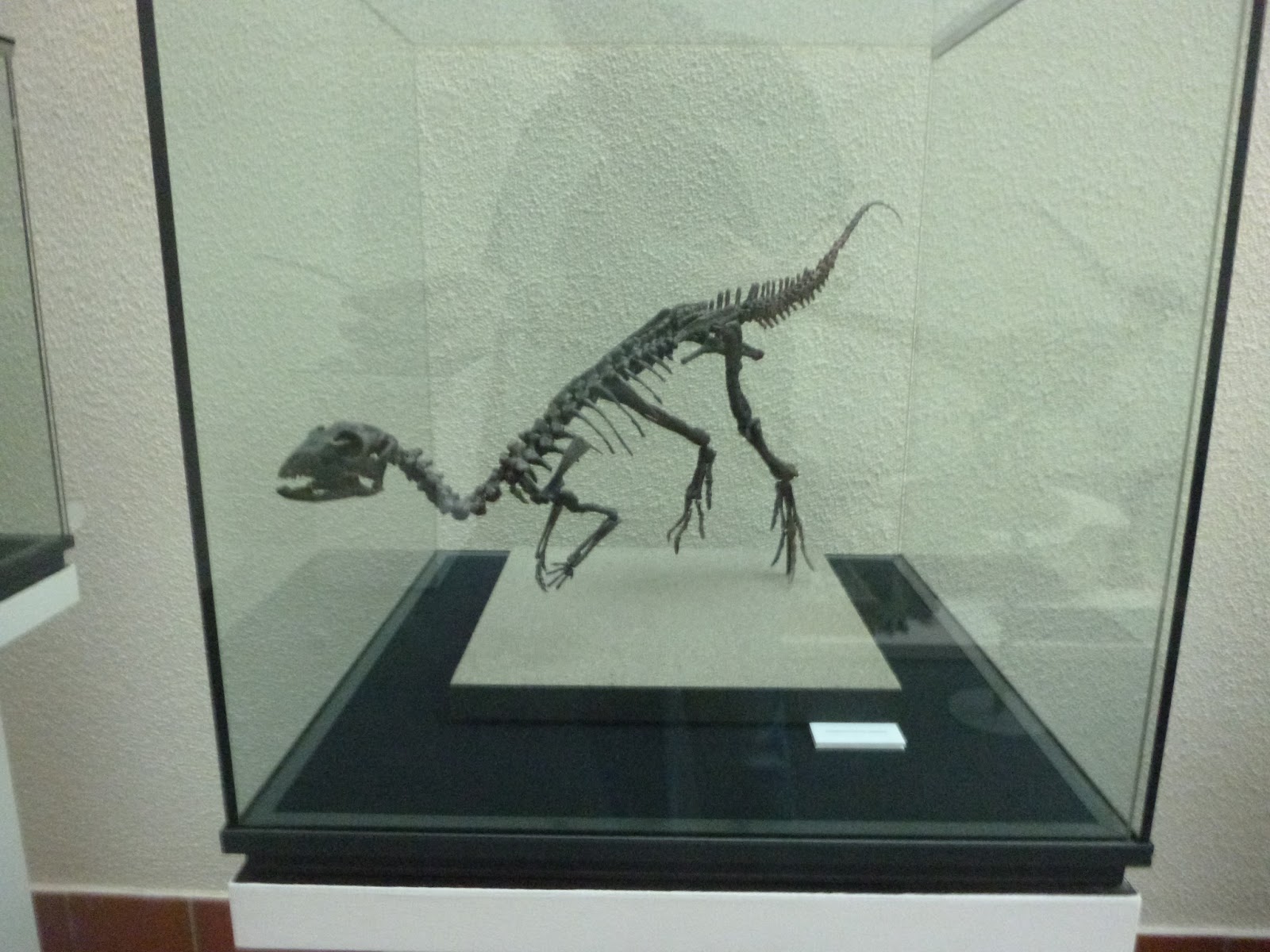
Lots of mini-Dino skeleton sculptures that were randomly on display


A Sea-lizard skull


My new pet!