Showing posts with label history. Show all posts

Friday, 11 March 2016

Day 98: More of Melbourne

Saturday 12th March

Walking round the city
State Library
Need Kelly's armour

Distance:
Total Distance:

I basically spent the day wandering around the city. I visited the local Games Workshop and Bread Top in the morning. I then visited the state library. This large building is centred around the large, round, reading room. Around the edge the walls rise up 6 stories, 3 of them filled with exhibits about Australia's history.

There are exhibitions about the early explorers, including many of their own books on the botanical and animal wonders they found here A few of the first colonists get a mention, as well as how the city was founded and built. Later on, on the lower levels, the more recent history of modern Melbourne is celebrated, including the eras of pulp fiction and the rights of women and LGBTs.

The most famous exhibit though should be the complete set of Ned Kelly's armour.
Ned Kelly was a famous "bush ranger"- an Australian outlaw. He lead a small gang of four and was famed for  being a Robin Hood style rogue- only stealing from the rich and helping the poor. One of his most famous example was whilst robbing a bank when he set all of e mortgage documents in the vault on fire, thus freeing the local farmers from their repayments. 
He was eventually besieged with his gang in a small house in the outback. A local blacksmith had fashioned the gang body armour and helmets from ploughs. (When asked about the effectiveness of this the local plough manufacturer said it wasn't possible to make such bullet proof armour- it would later be found that e armour was made from some of his ploughs.) During the siege the police guns couldn't penetrate the armour, preventing the worst injuries to the gang. This helped in the siege but their arms and legs were not well protected. Slowly limbs were rendered useless and arteries severed. Eventually only Ned was left, one arm hanging limp by his side and limping on a leg. Police shot him down resulting in his capture.
The judge in Melbourne (can't remember his real name right now, he's got a statue outside the library, nicknamed "the hanging judge" for hanging, basically, everyone), declared him guilty of enough charges to see him hanged. The next day he was taken out and uttered (probably) his famous last words "Such is life".

The gangs armour was taken as souvenirs by the various police present. Since then tough the pieces have been reclaimed. Apparently there's one set in the police museum, another in the justice museum, and Ned's in the library. Some tampering has occurred, bits have been lost and supposedly added, but it's mostly his armour, still with the marks from the blacksmith's hammer and where the bullets hit.

Day 96: Melbourne

Thursday 10th March

Free walking tour 
State Library
Prison and Ned Kelly
Gold miners and their rich kids
Parliament
World's oldest standing original China Town
Modern Melbourne
Tallest building in the Southern Hemisphere 

Distance:
Total Distance:

A few of us from the tour group were spending some extra time in Melbourne. Someone had found a free walking tour. Normally these cost around $30 (£15) but one company has set up on a donation based system. Apparently they'd been excellent in Sydney (wish I'd gone on it) so we all met up at 10:30am outside the State Library to spend a morning exploring the city.

We past the old court house and the gardens which include the Victorian-era exhibition centre (one of the few Victorian buildings not pulled down in the 60s & 70s) were closed for a rose and garden competition. Inside the courtyard of the old prison our guide showed us were Ned Kelly the Bushranger (outlaw, some would say Australia's Robin Hood) was hanged. I would later go to see his armour in the library exhibit about him.

The Parliament building stands at one end of the original grid system the city is based around. The grid itself was built when Australia was still a British colony. This is the reason for the lack of public squares and parks in the city- the Empire had learned that rebellions started in squares. No square no rebellion. Easy. The state parliament building stands at the top of one of the major roads running through the grid system. It was once planned to be used as the federal parliament, back when Sydney and Melbourne were competing for the title of capital. Instead Canberra was picked as a point between the two and given its own mini-state.

Today Melbourne is no where near as big as Sydney. Yet it was once Austrilasia's largest city. This was caused by two economic boom periods. The first was when gold was found nearby causing thousands to descend on the colony (seems this happened to a number of places in the Southern Hemisphere back then) until vitually all of the gold was found. However, many of these miners were frugal, unlike their children. The second boom came a generation late when the kids took the cash and spent it all. Once all of this was gone, however, it left the city with a myriad of grand architecture and parks. A few of these protected buildings still remain, though many were destroyed for "progress". Thankfully they left behind places such as the library and the arcades- Victorian/Edwardian shopping malls, with many up market shops and cafes which have been there now for many decades.

Melbourne has, arguably, the world's oldest China Town. There's some contention with places in California, but theirs burnt down where as much of it here is still standing. We had a quick wander through before stopping for coffee and snacks.

Good, cheap, food isn't so easy to find in Australia, let alone the cities. There's no Greggs here, and Aldi's only just started to invade. But I found BreadTop! It's a really good, cheap, bakery, where everything looks fresh, the dough is light and fluffy, and there's things I could never imagine. Most of its $2.50 (£1.25) when here I'd expect to pay 50-100% more than that. I've since had sausage donuts, a tuna and egg thing, and a spiced chicken bun here, but on this day I got a naan bread covered in lightly spiced sauce and caramelised onions plus an almond and custard donut/bun/slice/thing for lunch. Love me a decent bakery. :)

We walked though some of modern Melbourne, including the new city square and down to the tallest building in the city. As we walked we pasted by Melbourne's new popular cultural past time art project. It used to be illegal to put graffiti on any building. Then people were allowed to put it on there own. Now many companies pay professionals to spray great art works onto their walls. The city now also provides spaces in small alleys for anyone to practice their skills. Thus street art has become a tourist attraction in its own right, people flocking to these alleys to see what's new. In fact there's so many people it's hard to get a decent picture of the art without people in the way!

Let's be honest, there's not all that much in the Southern Hemisphere compared to the north. So when someone says the biggest/smallest/widest/oldest/most popular "in the Southern Hemisphere" it's only mildly impressive. It does sound great the first few times, but after 5 times in a morning the awe gets lost somewhere. However, the tallest building in the Southern Hemisphere is still impressive. 

After the tour we went into the Eureka Tower- 297.3 metres (975 feet), 91 floors, it stands over Melbourne in blue glass, with white lines running across its surface. Kind of looks like a ruler. At the top some windows are coloured gold with a little line of red running down. The design is based around a workers strike near the site during the late years of the British Colony. The workers' flag was blue with white stripes. Some of the workers were shot, hence the red line.

It is the largest building in the Southern Hemisphere, and the world's largest residential building. At observation deck there's a little cafe, photo booth, gift shop, and Australia's highest post box (there's probably a higher one in the Andes, so no SH title there). We also chose to go into a small box they have which slides out of the side of the building, with a glass floor, so you can see all the way down to the ground!!! The floor isn't perfectly clear and the fog was rolling in at this point so the view was only mildly worrying. Great spot to see the city from though.

Saturday, 13 February 2016

Day 69: The First Prison built and The Catholic Cathedral

Friday 12th February 

Going to the original jail house in Sydney and the St Mary's Catholic Cathedral 

Distance: Bus, 6km, walk, 4km

Total Distance: 10569km

The first convicts came to Sydney in 1788, building the colony that would become the city. Australia is the one convict colony that became a nation state in its own right. Yes, there were more-the UK sent its uncivilised scum all over the empire! The were effectively used as slave labour even as the UK finally outlawed slavery. Only in 'Stralia did they get organised and make it their own place.

One of the reasons for the success of the colony was its use of skilled labour. Anyone who knew a trade could be used by the government or a private individual as a cheap employee. Not only such trades as shepherds, blacksmiths, and coopers made it out here, but even people who had once been engineers and architects. Thus it was a convict who designed and organised the building of the first major prison here. It's so sturdy it still stands today.

The site has changed over the years, but the central building is still the same. A large building on three levels, divided into four rooms, six for 30 convicts each, six for 70 convicts. Each of the 600 men and boys slept in hammocks, some of which have been recreated on the top floor.

Outside was the courtyard, surrounded by trade buildings built in a solid perimeter to form a wall. Much of this has since been demolished to make way for new buildings as times have changed. The original gate houses are there though and one corner building. Doesn't look like much of a perimeter though. Didn't need to be, most convicts kept there chains on hands and feet throughout their incarceration. However a few did make it over the wall. Most came back within a few hours-there wasn't much to do in early Australia, other than get killed by the ecosystem.

I made a quick trip to the enormous building next door too- St Mary's Catholic Cathedral, built in the medieval gothic style. It still amazes me that people just over a hundred years ago decided to build buildings of the type that we constructed in Europe 500 years ago. They're expensive, time consuming, and technically difficult to build. Yet here it is, a European cathedral in appropriate style and grandeur, on the other side of the world. I first wanted to look around at lunch time,but arrived during mass, when people looked to have come from work. Deciding to wait until later I went to the prison. Later I accidentally arrived during afternoon mass which many seemed to be attending straight from work. I quietly waited before taking a look around. The Catholic Church doesn't do things by half here. There's all the small altars, alcoves, and shrines one would find in a far older cathedral. They also have the garments of a Saint, the last Catholic priest killed by the English government.


Sunday, 6 December 2015

Day 2: Gisborne, Captain James Cook, and logs

When: Day 2, Monday, 7/12/15
Where: Gisborne, first city to see the sun, first landing of Captain James Cook
Who: Wingham and Tonto
How: on foot (I'm so out of shape right now!)
Why: Gisborne is one of the few major cities on the North Island I hadn't visited. It proclaims itself as being "First place to see the light" (it's even on the drain covers). It is built around that landing sight of the first pakeha (Europeans) to get here. There was once a large amount of export industry here, but as roads improved it was deemed easier to export on the west cost, transporting everything there via the roads. That apparent exception to this is the timber.


I started the day win brisk walk to, around, up, and over, the large hill that over looks Gisborne. 
At the base of the hill is the port, where today a ridiculous number of logs were being loaded.
By the entrance to the port, however, sits a monument to the first pakeha to land on New Zealand, Captain James Cook.
Above this spot, on the hill, are numerous sites, including old cottage sites, look outs, and the observatory. May favourite spot has to be the statue of "Cpt James Cook" near the top. It's not James. It's a bronze replica of a random marble statue from Italy. The uniform's not British, and the face is nothing like that of the portraits of Jimmy. It was all sponsored by a brewery- they have the statues twin at their main site in Auckland. Yet it's still a good representation, and the view is pretty sweet, so it'll do.

After all the exercise the rain set in, a signal to head off for the museum.
Admission free on Mondays! Good timing
The museum doubles as an art gallery, so there was lots on photography of the local area, art exhibits, Maori and Pakeha history.
Most amazingly they've got half a ship in the museum! 
The Heart of Canada, from Belfast, sank just off the coast. The captain's quarters and the piloting area (don't know the real name, bit with the wheel) were salvaged and rebuild on the side of the museum.
There were also exhibits about the areas surfing history, Maori boat building, and James Cook's initial landing.

From here we went on to the Botanical Garden, with its desert green house, aviary, native plant garden, and assortment of trees. Nice place to sit and take 5 before I came back to the hostel.

All in all a good day to start me off. Now I really need a shower, lots of tea, and some sleep.
Tomorrow morning we're off to Rotorua!


Monument to Cpt Cook

Not Cpt Cook, but close enough

View of the bay, with ship being filled with ex-trees

Tonto taking charge of the Heart of Canada

Looking at the compass

The real Captain James Cook

Random little fence in the Botanical Gardens, looks like bamboo, actually painted steel pipes. Penned Tonto up to keep the ducks safe

The Flying Nun, an ex-convent, now hostel

Sunday, 26 April 2015

Taranaki: Part 2, York Road Loop Track

Hello! It seems to have been a while since Part 1 (and its still not finished fully) but I'm afraid we've been quite busy here, and there's no signs of it getting quieter. With this in mind, however, I've decided that I should really be posting something (anything) at a regular time slot. Therefore I will be attempting to post an update each week by Sunday evening NZ time (so it'll be up Sunday morning UK, Saturday night USA) - I wrote this last night, posting didn't go ahead as I got invited to the pub have way through. Sorry, priorities.

Before I get into this tale properly I should probably make you aware of ANZAC day. This is Australia & New Zealand's equivalent of Rememberance Sunday, except that it's a public holiday (great idea), and the Aussies use it to get HAMMERED whilst playing games- to the confusion of some of the Kiwi News teams. This year it was a big event as it was 100 years since the landings on Gallipoli, the founding campaign of the ANZACs (though NZ forces had been used by the British Empire previously in such regions as South Africa).  They do a dawn service at local memorials- people arrive about 5-6am then there's a parade and a remembrance service, including bag pipes (there's a lot of bagpipes here, more than Edinburgh!) and a salute with guns (Wouldn't be allowed in the UK, I'm sure. They were using 303's too, the main infantry rifle used by the Empire at the time). Afterwards there was a few speeches by the mayor, an air force officer (there's a large air base locally) and a local school pupil. All very nice. Oh, and there was free rum & coffee. At 6am. Free. Rum & coffee- together, mixed. Great idea! Tasted like chewy molasses. I'll try do more about the ANZACs for post later, when I have the time it deserves. There's a special exhibit in Wellington about them, so might go see that and get some proper information before I start trying too hard. Was a fantastic day and very well organised by the whole country, as well as the events that occured with the Australians and Turkish at the ceremony in Gallipoli- and event I hope was publicised internationally.

So, back to the beautiful long weekend I had out west, this time moving onto the Sunday

I began that morning, as previously discussed, waking half way up a volcano. This happens quite a lot in NZ. For the Sunday I had decided to travel down to the simple, low level, walk that follows the route of an old rail line which serviced a quarry and rock crushing plant. 

This quarry, 100 years ago, produced the "metal" used to create the region's first roads. In New Zealand not all roads are have tarmac- there are some places quite out of the way here, and only a few people go to certain places, such as certain farms and starts of tracks. These roads instead are "metalled". Its not metal though, its simply called than. Really its just a covering of those little grey stones they use on normal roads without the tarmac to stick it together. It makes for a reasonable surface- not great, but good enough for tracks and the like. Before larger scale operations and protected statuses, though, "metal" was quarried from various sites, and this place was one of the major sites. 

Below are pictures of the signs about the track at its entrance- I hope you can make something of them, if you click on them you'll get them at full size. In addition I've included the old cart that is at the entrance of the site.


Below are the 11 videos I made at various sites along the track. Most of the explanations are in the videos about the various sites.

https://www.youtube.com/watch?v=qAVtIG5pWkc&list=PLCFbtK9Mpf6of27-tpNOqYqyvFtff7GQR

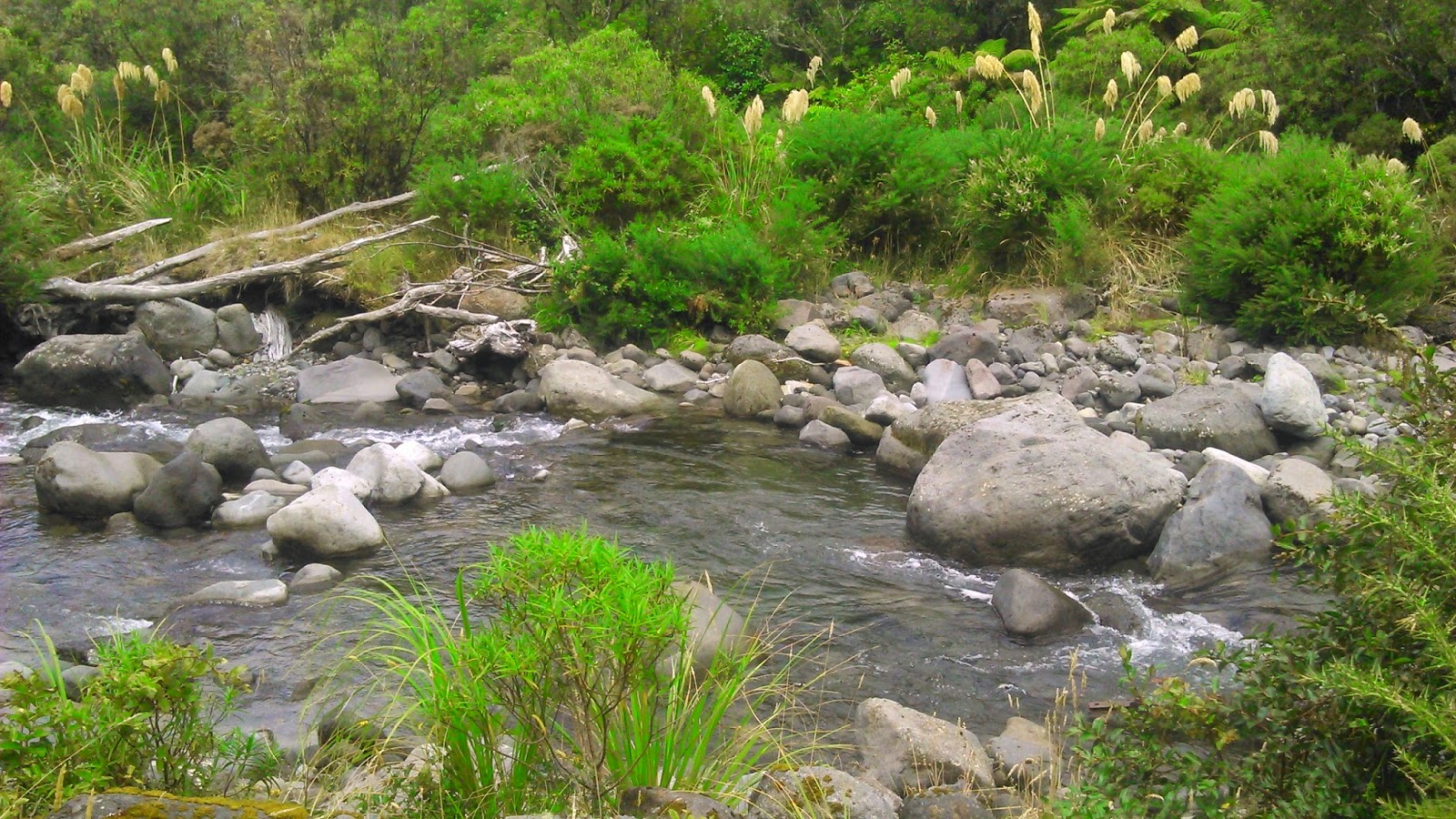
Finally, I just thought I'd show you some of the beautiful sites along the track- it was simply a nice day out.


This is the coloured water as described in the video "Hill Stream"